Newsletter Subscribe
Enter your email address below and subscribe to our newsletter

Enter your email address below and subscribe to our newsletter
All voices matter
 Bysonu
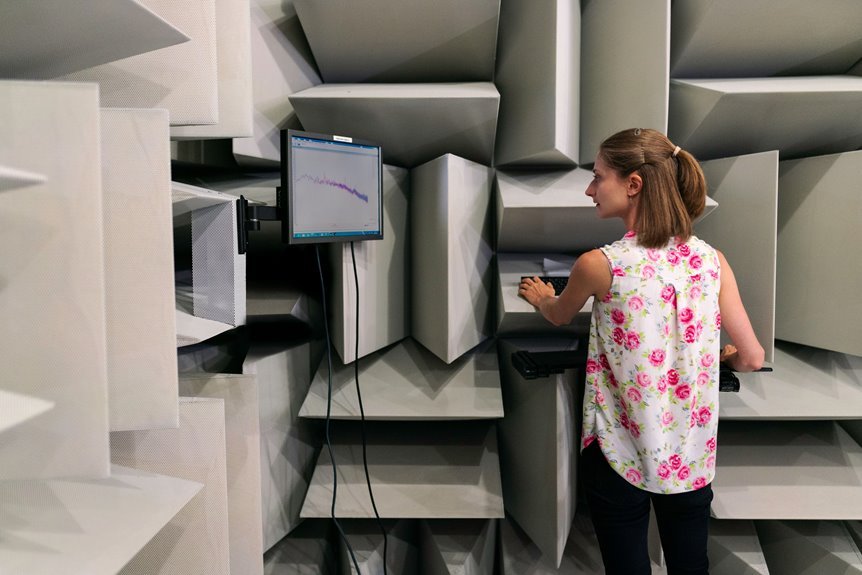
The VelocityLink Monitoring Chamber integrates real-time flow telemetry across controlled environments. It emphasizes non-intrusive data collection, standardized schemas, and lightweight dashboards for immediate visibility. Access is governed by least-privilege and RBAC to protect data integrity, with secure tunnels and scalable topology for cross-network diagnostics. The system supports modular workflows and verifiable interoperability, enabling precise velocity assessment. A coordinated approach to setup and security invites further exploration of its practical applications and integration challenges.
VelocityLink Monitoring Chamber is a device designed to observe and measure fluid flow within controlled environments. It serves researchers, operators, and engineers seeking real-time data without intrusion.
VelocityLink monitoring enables precise chamber velocity assessment, enabling consistent experiments and process control.
Network integration supports centralized dashboards, while robust access controls protect data integrity and secure system operations for authorized personnel only.
To implement the VelocityLink Monitoring Chamber across multiple networks, a structured approach is required to ensure reliable data flow and security. The setup emphasizes centralized policy, secure tunnels, and scalable topology. VelocityLink monitoring enables seamless Chamber integration, controlled User access, and modular Diagnostics workflows, enabling consistent telemetry, role-based permissions, and cross-network verification without compromising performance or freedom-loving agility.
Real-Time Monitoring and Diagnostics Workflows enable immediate visibility into VelocityLink-enabled networks, capturing telemetry and health metrics as they happen. The approach emphasizes nonintrusive observation, standardized data schemas, and rapid anomaly detection. VelocityLink monitoring integrates with lightweight dashboards and alerting, while diagnostics workflows provide structured runbooks for root-cause analysis, trend assessment, and corrective actions, supporting autonomous system responsiveness.
Security, access, and integration practices for VelocityLink systems prioritize least-privilege access, robust authentication, and standardized interfaces to minimize risk while preserving interoperability. The guidance emphasizes security access discipline, role-based permissions, and continuous credential hygiene. Adoption of integration best practices ensures modular connectivity, auditable events, and consistent APIs. Informed stakeholders pursue freedom with proactive threat modeling, secure deployment, and verifiable, interoperable integration.
Operational limits include stable input ranges, safe operating temperatures, and error thresholds. Long term logs indicate drift controls and retention policies. Networking compatibility ensures interoperability, while firmware rollback provides recovery options after updates, preserving system integrity and fault containment.
Data retention for long term logs is managed through tiered storage, retention schedules, and archival processes. Latency expectations vary with network congestion; in congested networks, throughput may slow while integrity and accessibility are preserved for compliance.
VelocityLink can integrate with legacy SCADA systems, provided appropriate adapters exist. Integration latency varies with protocol translation and data mapping, while legacy compatibility governs existing asset interfaces; overall, the solution aims for minimal disruption and scalable interoperability.
Latency variability in congested networks can swing widely; congestion impact degrades predictability. The system observes spikes and jitter, with delivery sometimes delayed, illustrating how pressure inflates response times and undermines steady, autonomous operation.
Firmware rollback is performed automatically if a new update fails integrity checks or degrades functionality, preserving a stable prior image; network resilience is maintained by rollback mechanisms and rapid fallback to last-known-good firmware across nodes.
VelocityLink Monitoring Chamber functions as a quiet conductor, guiding complex networks toward harmonious flow. Like a lighthouse on shifting tides, its real-time telemetry and standardized schemas illuminate the path for researchers and operators. Across diverse terrains, secure tunnels and RBAC guardrails keep the signal pristine, while modular workflows reveal hidden currents and potential bottlenecks. In this evolving panorama, the chamber makes interconnectivity feel almost inevitable, a familiar chorus guiding precision and reliable control.